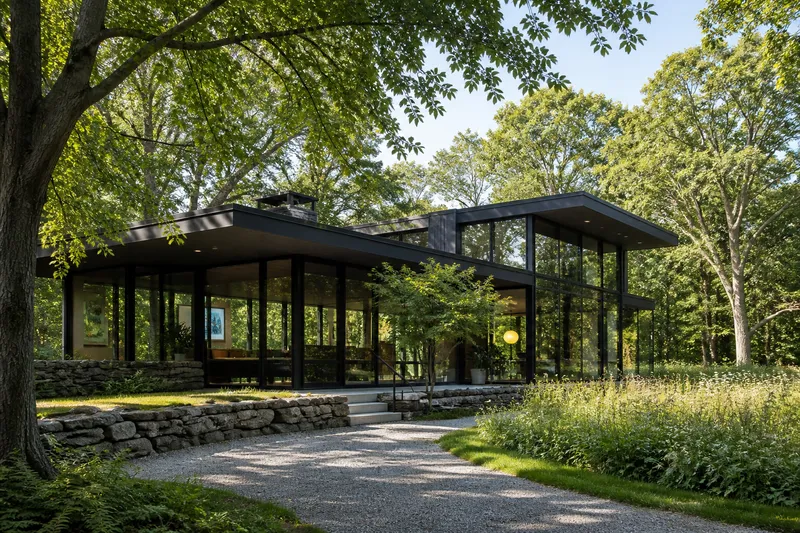
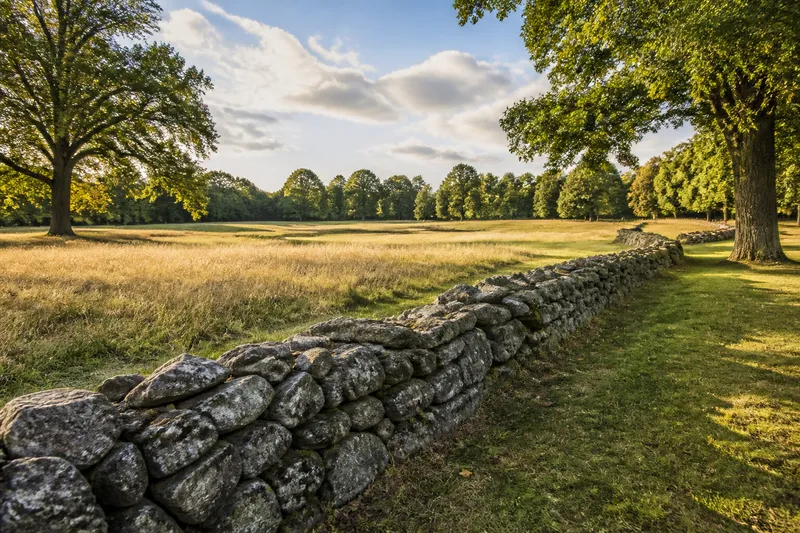
New Canaan’s modernist history extends beyond Philip Johnson. Marcel Breuer, Landis Gores, John Johansen, and Eliot Noyes also worked here during the postwar period, placing experimental houses among stone walls, winding roads, woodland, and older village streets. The New Canaan Museum preserves that wider record through its Modern New Canaan programs and archives.
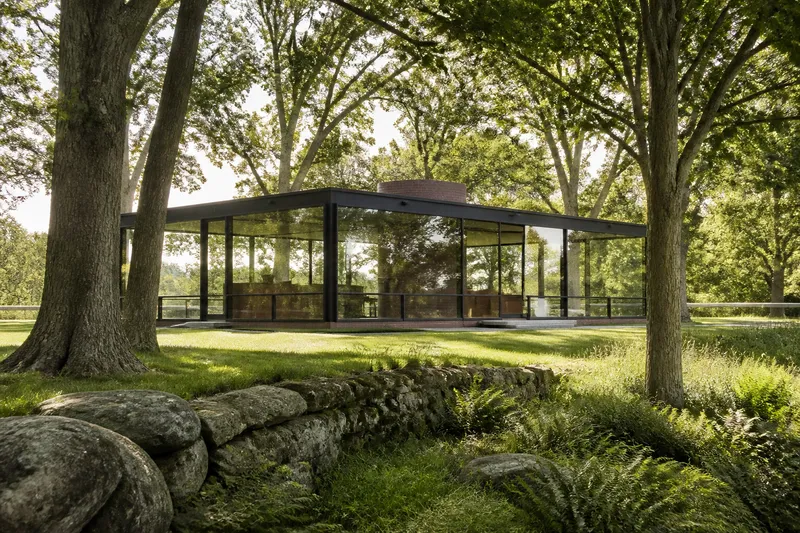
The Glass House makes that history visible as one architect’s estate developed over decades. Its transparent residence is only the beginning: the Brick House, galleries, studio, sculpture, and landscape reveal changing ideas about privacy, display, and movement. A longer tour shows more of that evolution than the famous pavilion alone.
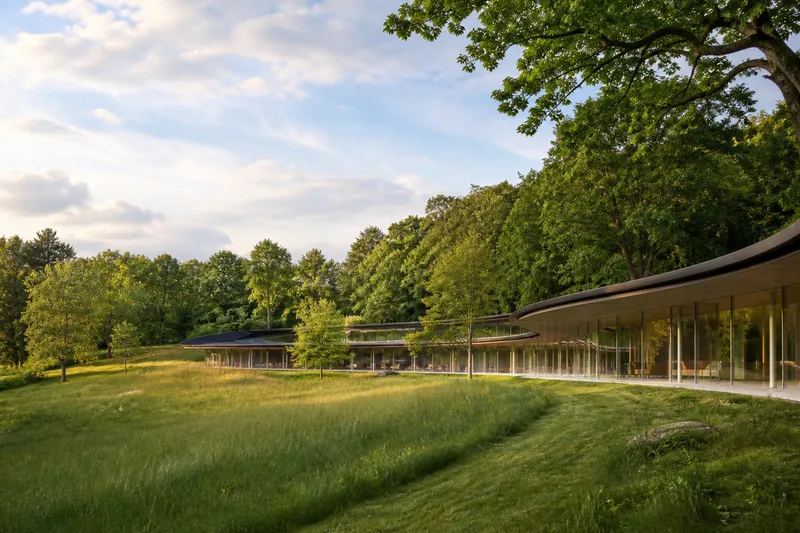
Grace Farms provides the contemporary counterpoint. Its River building connects a library, Commons, Court, Pavilion, and other public rooms beneath one curving roof, then opens onto meadow, wetland, woodland, and the Cattail Pond loop. The contrast is the reason to stay for two nights: one site interprets a private collection and designed estate; the other joins architecture, art, food, recreation, and public programs.
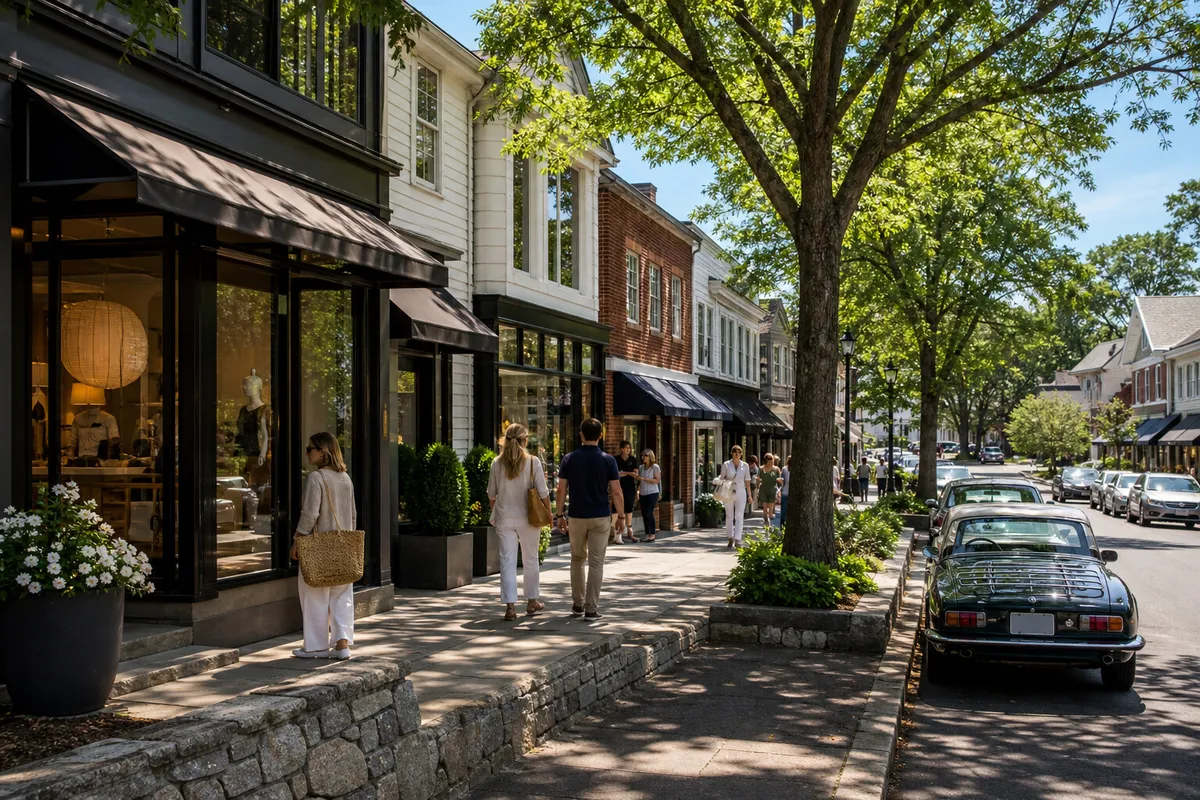
Elm Street keeps the trip compact between reservations. The station, Glass House visitor center, shops, coffee, and dinner are close together, while Waveny Park and the museum add the older estate and town history around the modern buildings. New Canaan works as a focused architecture trip, not a broad tour of Fairfield County.
The visitor experience also changes sharply from one site to the other. The Glass House requires a timed ticket, an Elm Street check-in, and a shuttle to a protected property where the chosen tour controls which buildings can be seen. Grace Farms uses free advance registration for a public campus whose rooms, art, dining, talks, and outdoor paths vary with the day. That difference is part of the architectural story: one visit is a guided reading of a private estate, while the other shows a contemporary complex in daily public use.
The town center prevents those two reservations from becoming disconnected excursions. Arrive by Metro-North, walk Elm Street, check in for the Glass House across from the station, and return to the same blocks for breakfast or dinner. A car is still needed for Grace Farms and Waveny Park, but the village remains the recognizable center of the trip.